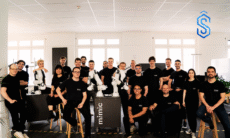


Zurich, Switzerland: Zurich-based edtech startup Sparkli has raised $5 million in a pre-seed funding round to launch what it describes as the first multimodal, AI-native learning engine designed specifically for children.
Emerging from stealth, Sparkli aims to transform children’s screen time into interactive, inquiry-led learning experiences that promote curiosity, agency, and future-ready skills.
Founded by former Google executives, Sparkli uses real-time multimodal artificial intelligence to enable children to build personalized learning expeditions on any topic within minutes.
Rather than static text-based responses, the platform converts children’s questions into multidisciplinary, real-world journeys spanning technology, sustainability, financial literacy, entrepreneurship, emotional intelligence, design thinking, and global awareness.
Also Read: Chips to Start-up Programme Trains Over 1 Lakh Learners in Semiconductor Design
Sparkli Funding to Accelerate Platform Scale and Global Pilot Programs
The pre-seed funding will support Sparkli in scaling its generative learning engine and preparing for a private beta launch scheduled for January 2026.
The company is currently validating its platform through a strategic pilot program with one of the world’s largest private school groups, spanning over 100 schools and more than 100,000 students globally.
This large-scale pilot enables Sparkli to test its AI-native learning model across diverse classrooms while refining age-appropriate design, safety guardrails, and adaptive learning workflows.
‘Agency and Curiosity Gap’ in Childhood Learning
Sparkli’s learning framework is built around addressing what it calls the “Agency and Curiosity Gap” in modern education. The platform is shaped by three core shifts.
The Velocity Shift moves learning away from static curricula toward real-time exploration, allowing children to engage with emerging topics as they arise.
The Engagement Shift replaces passive screen consumption with a multimodal environment that integrates visuals, voice, and playable simulations. The Skills Shift prioritizes creativity, problem-solving, and decision-making over rote memorization.
By combining these elements, Sparkli converts screen time into active, gamified inquiry rooted in educational value.
Also Read: VLSID 2026: Maharashtra Can Catch Up in Semiconductors with 25% Project Funding, Says Satya Gupta
Personalized Learning Through Adaptive Knowledge Graphs
At the core of Sparkli’s system is an adaptive interest and knowledge graph that evolves with each child over time. This enables the platform to deliver personalized learning pathways based on individual curiosity, progress, and engagement patterns.
For example, when a child explores how to build a city on Mars, Sparkli generates an interactive expedition that incorporates age-appropriate physics, environmental simulations, and infrastructure design challenges.
Children are encouraged to debate ideas, make strategic choices, and reflect on their decisions, reinforcing deeper learning outcomes.
Active Learning in Classrooms and Homes
Early pilots of Sparkli demonstrate its application across both classroom and home settings. In classroom environments, children have used the platform to simulate launching small businesses, engaging in discussions around budgeting and customer experience.
During unstructured sessions, students independently initiated learning expeditions on topics ranging from game design to cosmology.
Parents participating in consumer trials reported noticeable improvements in the quality of screen time, with children returning from sessions motivated to articulate ideas around sustainability, leadership, and civic responsibility.
Built by Google Veterans with a Focus on Safe, Age-Sensitive AI
Sparkli was founded by CEO Lax Poojary, along with co-founders CTO Lucie Marchand and CPO Mynseok Kang who previously worked across Google Area 120, Search, and YouTube.
The founding team has assembled engineers and designers from ETH Zurich and the education sector to build a platform that integrates generative AI, pedagogy, motion design, and game mechanics.
The company positions Sparkli as a safe, age-sensitive alternative to open-ended AI tools and chatbots, which can be overwhelming or unsuitable for younger users.
By embedding strong guardrails and child-centric design principles, Sparkli aims to modernize content delivery in an education ecosystem often constrained by slow updates and standardized formats.
Also Read: NICMAR University Pune Launches Specialised Postgraduate Courses for Infrastructure Sector
“Sparkli represents a step change in how children can interact with knowledge. The team is applying high caliber engineering and thoughtful pedagogy to a space that desperately needs innovation. Their traction with schools shows a real appetite for tools that foster curiosity and agency rather than passive consumption.” Lukas Weder, Partner at Founderful
Targeting the Global Education Market with an AI-Native Vision
With education widely viewed as one of the most impactful applications of artificial intelligence, Sparkli is positioning itself to address a significant opportunity within the $7 trillion global education market.
While existing edtech platforms have focused on digitizing traditional learning formats, Sparkli seeks to reimagine how children acquire and apply knowledge through AI-native experiences.
The company’s long-term vision is to evolve Sparkli into an operating system for childhood development, extending from curiosity-driven learning into creation and prototyping.
Sparkli plans to support learners across home and classroom environments and continue adapting as children grow into adolescence.